Laying the BRICS of a New Global Order: From Yekaterinburg ۲۰۰۹ to eThekwini ۲۰۱۳
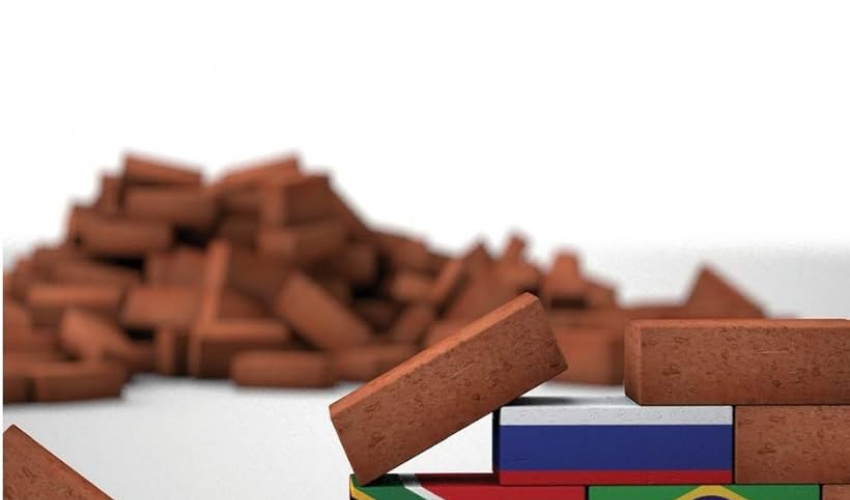
Laying the BRICS of a New Global Order: From Yekaterinburg 2009 to eThekwini 2013
Editors: Francis A. Kornegay & Narnia Bohler-Muller
Publisher: Africa Institute of South Africa (Project Muse)
Publication Year: 2013
About the Book
Laying the BRICS of a New Global Order: From Yekaterinburg 2009 to eThekwini 2013 is a major scholarly contribution that examines the rise and institutional evolution of BRICS — Brazil, Russia, India, China, and South Africa — as an emergent coalition reshaping the architecture of global governance. Edited by Francis A. Kornegay and Narnia Bohler-Muller, the volume brings together a diverse group of academics, analysts, and policy thinkers from across the BRICS nations to explore how these countries, despite their different ideological, cultural, and geopolitical orientations, are attempting to lay the foundations of a new multipolar world order.
The editors situate BRICS within the broader context of post–Cold War transformation, when Western powers increasingly bypassed multilateral institutions to pursue unilateral interventions. Against this backdrop, BRICS emerges as a corrective mechanism — a coalition advocating for multilateralism, South–South cooperation, and reform of existing global institutions. The volume’s contributors probe both the promise and contradictions inherent in such an alliance: while BRICS nations share a desire to reform global governance and enhance their influence, they also face internal tensions and divergent national interests that complicate cohesive action.
Through an interdisciplinary approach, the book explores multiple dimensions of the BRICS phenomenon — from China’s geopolitical ambitions and Russia’s reassertion of power, to India’s strategic balancing, Brazil’s pursuit of global reform, and South Africa’s effort to represent the African continent. The editors argue that BRICS is not merely an economic bloc but a geostrategic experiment, connecting the global North and South and reflecting the realignment of power in international relations.
By combining theoretical reflection with empirical insights, the volume captures the dialectics of cooperation and competition among member states. It reveals that the BRICS alliance symbolizes both the strength of emerging economies and the fragility of global multilateralism. Rather than offering a singular vision of the future, it opens an ongoing debate about whether BRICS can truly act as a transformative force in shaping equitable global governance.
In essence, Laying the BRICS of a New Global Order provides a panoramic, multi-perspective analysis of BRICS’ formative years (2009–2013), illuminating the intellectual and political debates that continue to define its trajectory. The editors emphasize that the group’s potential rests on its ability to remain open, transparent, and fearless in promoting a progressive and inclusive international order.
The analytical strength of this volume lies in its refusal to romanticize BRICS. It acknowledges the group’s achievements while scrutinizing the deep contradictions that persist between its rhetoric of solidarity and the realities of national self-interest. The book thus stands as an essential resource for scholars, diplomats, and policymakers seeking to understand both the promise and paradox of BRICS as an evolving force in world politics.
Table of Contents
Preface – Essop Pahad
Acknowledgements
About the Contributors
Abbreviations and Acronyms
Prologue: How Did We Get Here? – Bohler-Muller & Kornegay
BRICS I: The Terrain
- Laying the BRICS of a New Global Order: A Conceptual Scenario – Francis Kornegay
BRICS II: The Shanghai Cooperation Dimension
China
- Partnership for Collective Emergence: BRICS in China’s International Strategy – Da Wei
- BRICS: A New Cooperation Model on the Horizon – Huang Ying
- China and the Indo-Pacific in Beijing’s Strategic Calculus – Jian Junbo
Russia
- Russia’s Identity Dilemmas: BRICS, the G8 & the Shanghai Cooperation Organisation – Alexander Lukin
- Russia’s Geopolitical Calculus in the Launching of BRICS – Vladimir Shubin
- Russia in BRICS: Substantial or Instrumental Partnership? – Fyodor Lukyanov
- Russia, BRICS and the Global Supply Chain of Resources for Development – Irina Abramova & Leonid Fituni
- The Russian Perspective on Global Governance: Normative Challenges – Alexandra Arkhangelskaya
- Placing BRICS in the Hierarchies and Power of the Modern World: A View from Russia – Leonid Fituni & Irina Abramova
BRICS III: The IBSA Trilateral Dimension
India
- Theorising BRICS: Institutionalisation and Cooperative Agendas – Ravni Thakur
- Impulses: Trends that Will Shape India’s World – Sunjoy Joshi, Samir Saran & Ashok Singh
- India’s Security Calculus in Balancing Regional and Global Geopolitical Agendas – T. C. A. Rangachari
- India’s South-South and Emerging Power Dilemmas: The IBSA-BRICS Equation – Hari Hara S. Viswanathan
- India and the Indo-Pacific in New Delhi’s BRICS Calculus – Priya Chacko
Brazil
- Brazil and the BRICS: A Challenging Space for Global Relevance and Reform of an Obsolete World Order – Paulo Sotero
- Laying the BRICS of a New World Order: Brazil’s Economic Stake in the BRICS – Adrianna Erthal Abdenur
- Brazil in BRICS, a Manifest Destiny? Opposing Views of Caracas and Itamaraty – Maria Carnevali
- Brazil, South American Regionalism and Redefining the ‘Atlantic Space’ – Oliver Stuenkel
- Urban Governance, Social Cohesion and Sustainable Development: The Case of Brazil within BRICS – Belisa Marochi
South Africa
- South Africa’s Pretoria Agenda: The Role of State Sovereignty, Non-Intervention and Human Rights within the Context of Emerging Power Multilateralism – Narnia Bohler-Muller
- Building the BRICS of a New Global System: Cape to Cairo – South Africa’s Search for Strategic Depth within BRICS – Dianna Games
- South Africa within BRICS: Substance or Piggybacking? – Gerrit Olivier
- Domestic Challenges and the African Agenda: Is South Africa Just Another BRIC in the Wall? – Aubrey Matshiqi
Epilogue: eThekwini and Beyond – Kornegay & Bohler-Muller
Access in BRICS digital library




نظر شما :