The BRICS: A Very Short Introduction
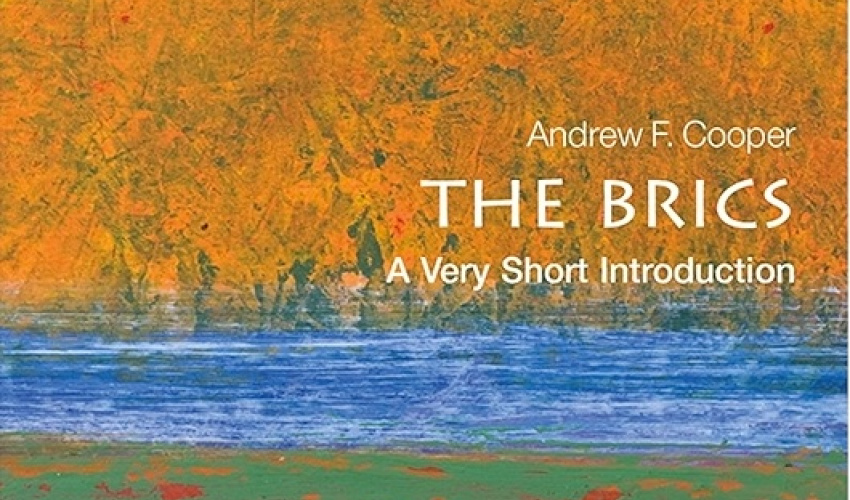
The BRICS: A Very Short Introduction
Author: Andrew F. Cooper
Publisher: Oxford University Press, Very Short Introductions
Publication Year: 2016
The BRICS: A Very Short Introduction by Andrew F. Cooper (Oxford University Press, 2016) provides a concise yet insightful exploration of one of the most significant geopolitical developments of the twenty-first century — the formation and evolution of the BRICS (Brazil, Russia, India, China, and South Africa). The book situates the rise of BRICS in the broader context of post–Cold War transformations, the 2008 financial crisis, and the growing disillusionment with Western-dominated multilateralism. Cooper investigates how a term originally coined by Goldman Sachs to describe emerging markets evolved into a political and diplomatic coalition capable of influencing global governance.
Through seven compact chapters, Cooper traces the BRICS’ progression from an economic acronym to a platform of international dialogue and cooperation. In Framing the BRICS, he explains how the grouping embodies the ambitions of emerging powers to gain recognition and redefine global hierarchies. A Contested Invention and A Historical Departure chart the group’s institutional birth and its gradual detachment from the G7-centric order, while Hanging Together examines the internal contradictions—rivalries between China and India, differences in political systems, and diverging economic interests—that challenge its unity.
The discussion on the New Development Bank (NDB) is one of the book’s strongest contributions. Cooper demonstrates how the NDB represents both a symbolic and functional milestone in creating alternative development mechanisms independent of Western financial institutions. Yet, as he notes, BRICS remains state-centric and largely detached from civil society participation, limiting its democratic legitimacy.
In the final chapter, The Staying Power of the BRICS, Cooper considers the bloc’s future amid slowing growth and political fragmentation. Despite its weaknesses, BRICS has consolidated a distinct identity through informality, flexibility, and pragmatic diplomacy. Rather than dismantling the global order, it seeks recognition and influence within it—challenging hegemony while operating inside existing frameworks.
Analytically, Cooper views BRICS as a hybrid phenomenon: part protest, part adaptation. His tone remains cautiously optimistic—acknowledging its potential to reshape global governance without overstating its cohesion or transformative capacity.
Cooper’s analysis reveals BRICS as a paradoxical coalition—united by shared discontent with Western dominance yet divided by conflicting regional interests and political priorities. The book’s strength lies in its ability to demystify BRICS as both an economic and diplomatic experiment: informal, flexible, and still evolving. While brief, it offers a balanced framework for understanding how emerging powers negotiate legitimacy and agency in an asymmetric world order.
Contents
1:Framing the BRICS
2:A contested invention: The BRIC, BRICs, and the BRICS
3:A historical departure
4:Hanging together
5:Building the new development bank
6:BRICS as the recognition of states, not societies
7:The staying power of the BRICS
Further Reading
Index
Access in BRICS digital library



نظر شما :