

BRICS and the Ability to Change or Reform the International Relations System
BRICS and the Ability to Change or Reform the International Relations System
Article type: Research
Authors: Arezou Khordmandan, Bahram Yousefi, Rouhollah Shahabi, Shiva Jalalpour
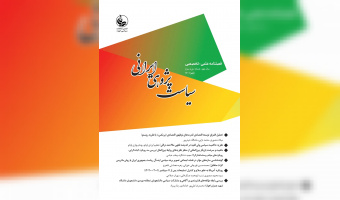
Source: Iranian Political Sociology (Jame‘e-shenasi-ye Siyasi-ye Iran)
Volume: 5
Issue: 11
Year: Bahman 1401 (2023)
About the article
This article examines the ability of BRICS states to change or reform the structure of the international system. The study shows that BRICS was formed to increase members’ political and economic influence and challenge Western—especially American—economic and political management. The group has created a framework for long-term economic cooperation and short-term political alignment, thereby providing a platform for influencing international relations.
However, the article emphasizes that internal heterogeneity among BRICS members—in terms of national interests, cultural backgrounds, and political objectives—prevents the emergence of a fully cohesive, integrated group. Despite successes such as creating a development bank and independent financial institutions, BRICS has yet to propose a comprehensive, coordinated program to rival Western economic power and international institutions.
The study concludes that while BRICS holds the potential to expand its global political and economic influence, its capacity to bring about fundamental changes in the international system remains limited as long as members retain divergent expectations and goals. This paradox suggests that BRICS functions more as a tool for advancing national interests than as a unified organization for reforming the international order.