

Exploring the renewable energy-environmental sustainability pathways
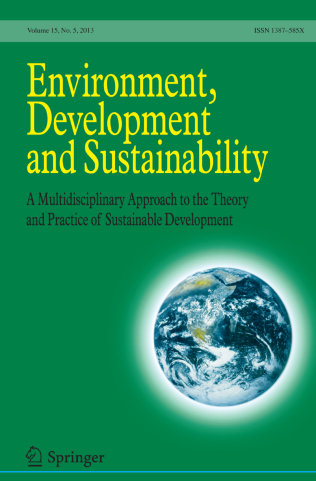
Exploring the renewable energy-environmental sustainability pathways: what do the interplay of technological innovation, structural change, and urbanization portends for BRICS?
Authors: Ridwan Lanre Ibrahim, Abraham Ayobamiji Awosusi, Kazeem Bello Ajide, Huseyin Ozdeser
Journal: Environment, Development and Sustainability
Volume & Issue: Volume 27, pages 191–211
Published: September 26, 2023
This review examines the role of renewable energy in shaping environmental sustainability pathways within BRICS countries—Brazil, Russia, India, China, and South Africa—over the period 1992–2019. The study investigates how technological innovation, nonrenewable energy, nuclear energy, service-sector value addition, and urbanization influence carbon emissions and sustainability outcomes.
Employing advanced econometric techniques, including second-generation tests for cross-sectional dependency and the bootstrap Westerlund cointegration test, the analysis confirms the interconnectedness of these factors.
Findings indicate that nonrenewable energy, urbanization, and technological innovation contribute to higher carbon emissions, while renewable energy, nuclear energy, and service-sector growth help mitigate environmental degradation. Causality tests reveal unidirectional links from nonrenewable and renewable energy to CO2 emissions, and from emissions to nuclear energy, service value addition, and urbanization, whereas a bidirectional relationship exists between technological innovation and carbon emissions.
The study underscores the critical need for BRICS policymakers to prioritize renewable energy adoption, promote sustainable urbanization, and leverage technological innovations that reduce environmental impact. By integrating these strategies, BRICS nations can enhance their environmental sustainability, balancing economic growth with climate resilience and supporting long-term ecological health.