

BRICS as a Driver of Global Economic Growth and Development
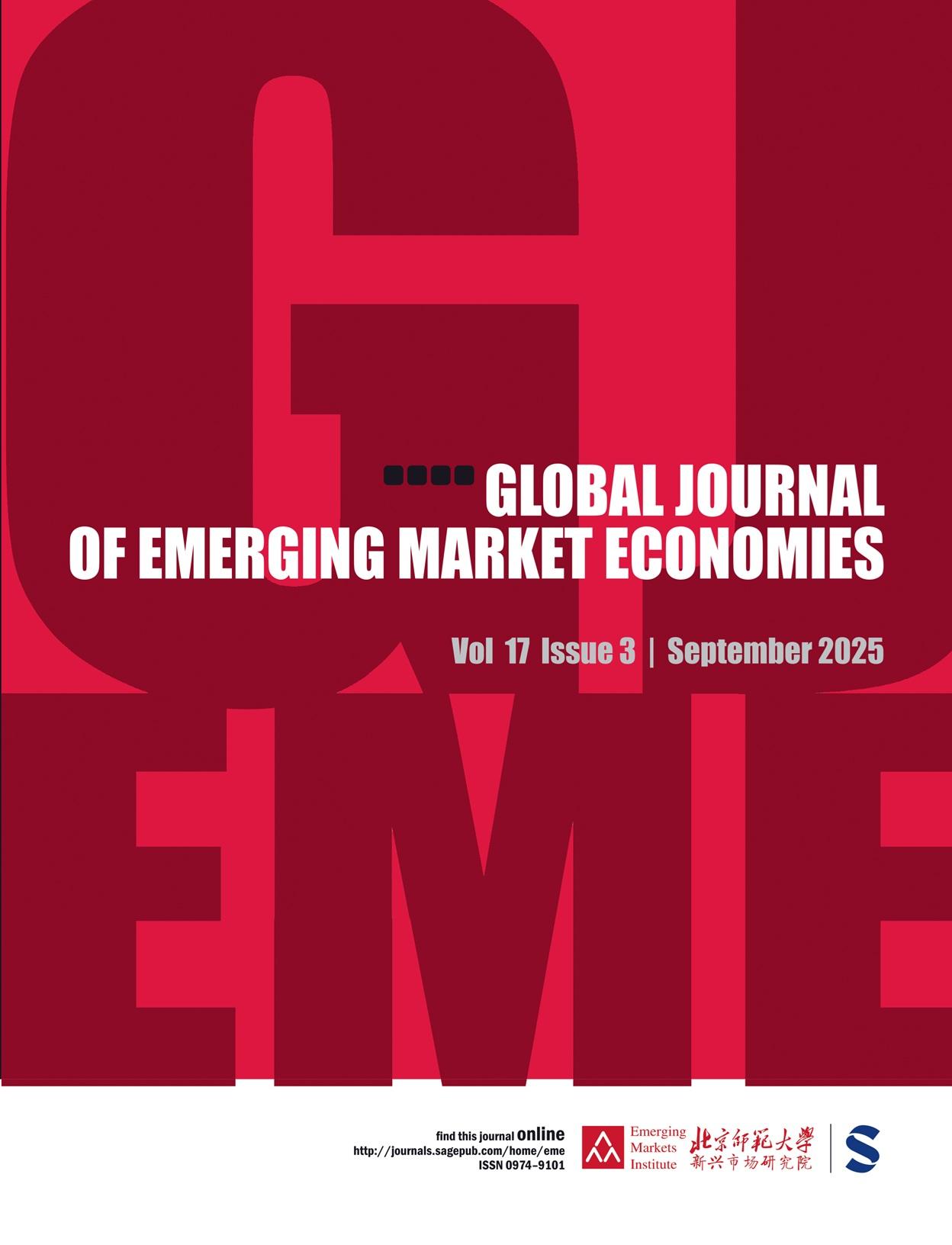
BRICS as a Driver of Global Economic Growth and Development
Author: Badar Alam Iqbal
Journal: Global Journal of Emerging Market Economies
Volume & Issue: Volume 14, Issue 1, 2024
The paper provides a comprehensive overview of BRICS as a critical force in global economic growth, emphasizing the bloc’s demographic, economic, and geopolitical weight. BRICS accounts for roughly 40% of the world’s population, 25% of global GDP, 30% of land coverage, and 18% of world trade, demonstrating its importance in shaping international economic governance. The article tracks the historical evolution of the group, from BRIC’s early sectoral cooperation to the establishment of the New Development Bank (NDB) and Contingent Reserve Arrangement (CRA), highlighting their roles in accelerating infrastructure development and sustainable growth.
The COVID-19 pandemic has served as a stress test for BRICS, revealing both vulnerabilities and the bloc’s potential as a cohesive mechanism for multilateral cooperation in health, social welfare, and global governance. The article also synthesizes findings from seven empirical papers included in a special issue, covering topics such as trade and poverty linkages, food systems, foreign direct investment (FDI) trends, financial literacy, carbon emissions, bond market efficiency, and demographic challenges. These studies collectively demonstrate the diversity of economic, social, and policy issues facing BRICS countries and the bloc’s capacity to influence regional and global development agendas.
Overall, the work situates BRICS as both a laboratory for multilateral collaboration and a key actor in advancing inclusive economic growth, technological innovation, and sustainable development within emerging economies. The findings underline the strategic importance of cooperation and policy integration among BRICS members to address both internal and external challenges, reinforcing their growing relevance in the global economic order.