

The BRICs, US ‘Decline’ and Global Transformations
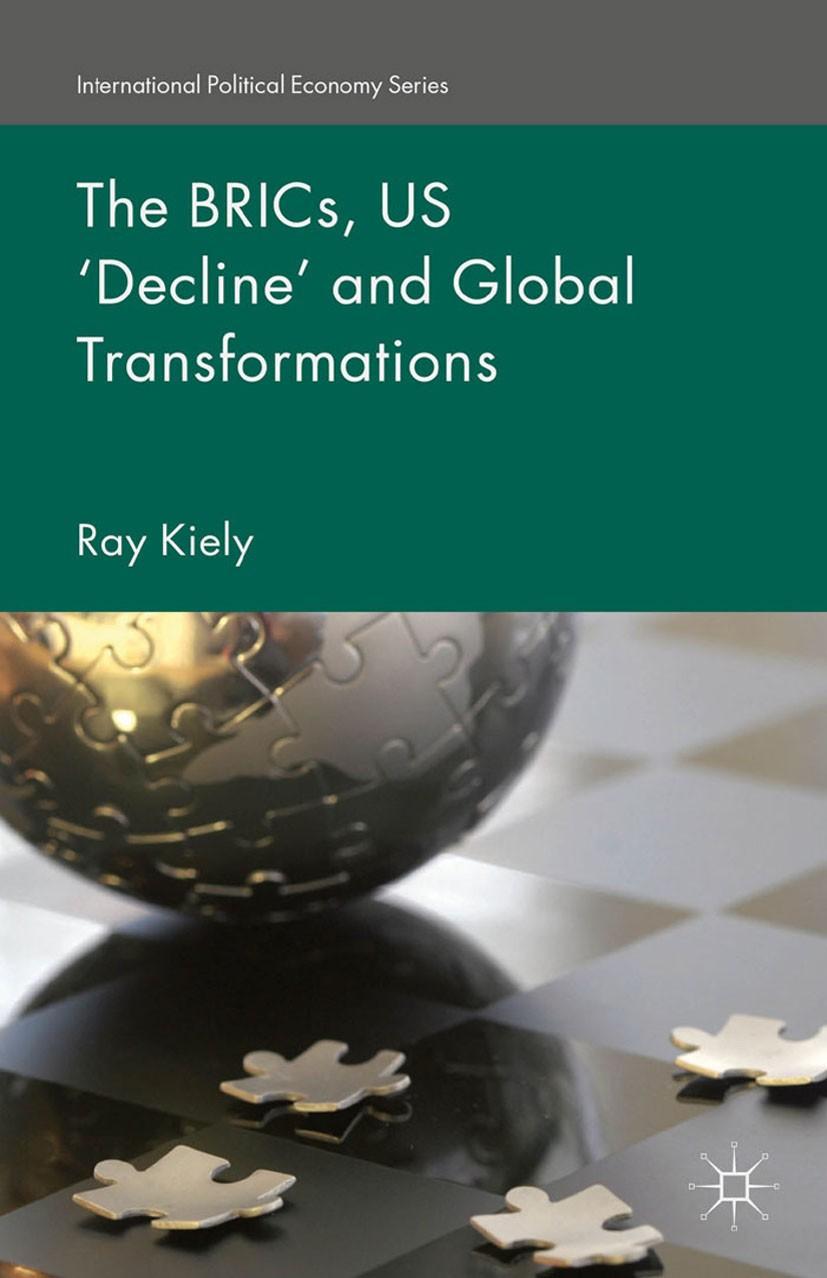
The BRICs, US ‘Decline’ and Global Transformations
Author: Ray Kiely
Series: International Political Economy Series
Publisher: Palgrave Macmillan, London
Publication Year: 2015
About this Book
Ray Kiely critically examines the narrative of the BRICs’ rise (Brazil, Russia, India, China) and the supposed decline of the United States, with a focus on global transformations in the late 20th and early 21st centuries. Covering the boom years from 1992 to 2007 and the crisis years after 2008, the book argues that the progress of the BRICs has limits, and that claims of U.S. decline are often exaggerated.
Kiely explores the role of state capitalism, globalization, and economic policies in shaping the global balance of power. He assesses the achievements of the BRICs, the persistence of global inequalities, and the ongoing influence of Western-dominated international structures. The book provides a balanced critique of the idea that the rise of the Global South automatically signals a transformative shift in world politics or economics.
It is an essential read for students, scholars, and policymakers interested in global political economy, development studies, and the dynamics between emerging and established powers.
Contents
- Introduction
- The Rise of the South: Rising BRICs, Declining US?
- The BRICs, State Capitalism and Globalization: Challenge to or Triumph of the West?
- The BRICs, the South and the International Economy, 1992 to 2007
- The South and the Causes and Consequences of the Financial Crisis, 2007–14 –
- Global Inequality and the Rise of the South
- The South and Geopolitics: From Bandung to the BRICS?
- Conclusion: Development, Innovation and the Limits of International Transformation