

Global and Regional Leadership of BRICS Countries
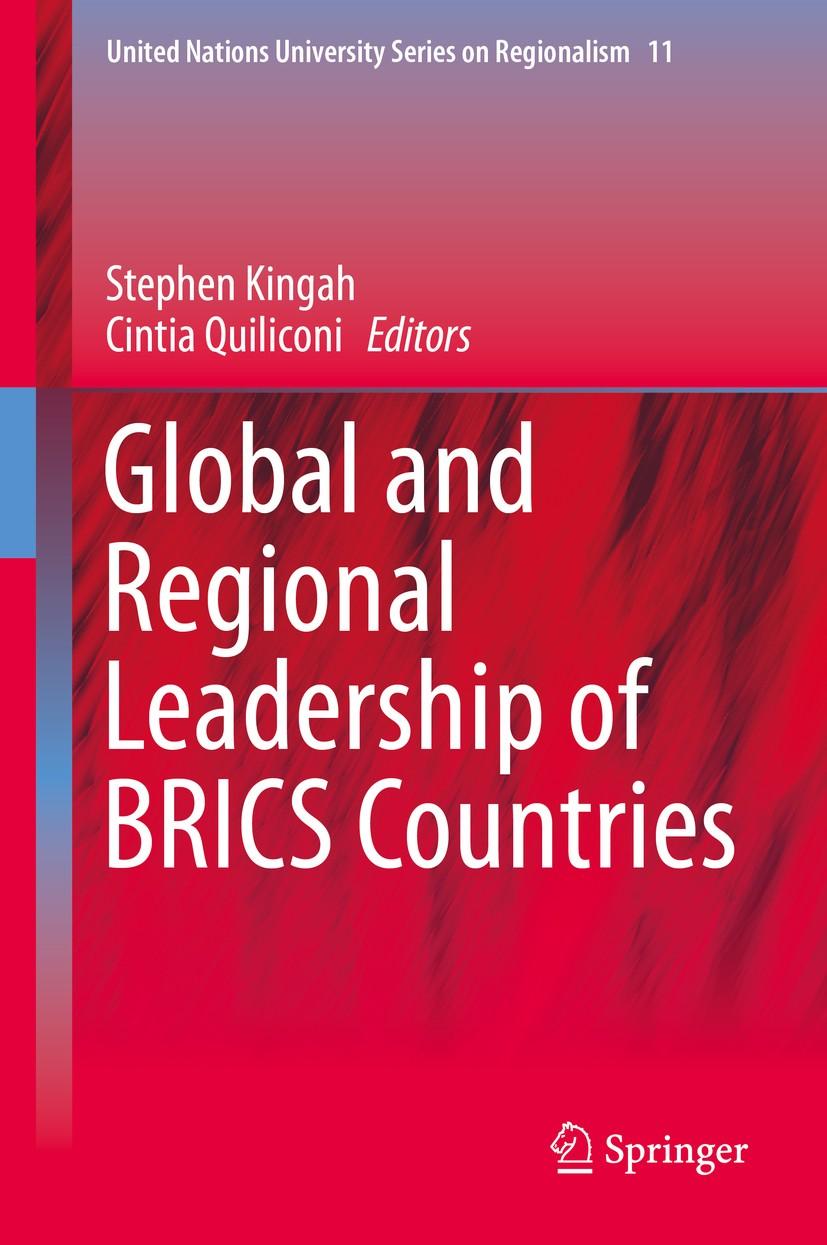
Global and Regional Leadership of BRICS Countries
Editors: Stephen Kingah, Cintia Quiliconi
Series: United Nations University Series on Regionalism, Volume 11
Publisher: Springer Cham
Publication Year: 2016
About This Book
This book provides a systematic analysis of the regional and global leadership roles of the BRICS nations—Brazil, Russia, India, China, and South Africa—within the context of a changing international order. It examines their capacity, willingness, and acceptance as leaders, both regionally and globally, using conceptual and analytical frameworks to capture the nuances of leadership dynamics. The book highlights the unique governance models emerging from the BRICS constellation, including initiatives like the New Development Bank, and interrogates how these states navigate competing interests and tensions internally and externally.
The chapters address the leadership trajectories of each member country. Brazil’s regional and global engagement is explored through development cooperation and diversification strategies. Russia’s economic and security leadership, alongside its role in Eurasian integration, is analyzed. India’s aspirations as a global power and its influence in South Asia are evaluated in terms of capability, willingness, and acceptance. China’s leadership is discussed with attention to soft power and regional integration in East Asia. South Africa’s role in Africa and its potential for global leadership is critically examined, including achievements and structural constraints.
The book also situates BRICS leadership within broader comparative perspectives, emphasizing the implications for global governance, regional cooperation, and the European Union. It provides valuable insights into the challenges, opportunities, and strategic significance of BRICS countries as emerging actors reshaping global power dynamics. This makes the volume an essential resource for scholars of international relations, political science, development studies, and global governance.
Contents
- Introduction: The BRICS in Global and Regional Governance
- Conceptualising Regional Leadership: The Positioning Theory Angle
- BRICS: Leadership in the Making
- Brazil’s Leadership Through Global Channels
- Cooperation for Development, Brazilian Regional Leadership and Global Protagonism
- Global Security and Economic Leadership of Russia
- Russia’s Leadership of Regional Integration in Eurasia
- India as a Global Power: Capability, Willingness, and Acceptance
- Indian Aspirations and South Asian Realities
- Leadership with Chinese Characteristics: What Role for Soft Power?
- Complexity of Relations Among Leading and Following States in East Asia
- South Africa’s Global Leadership Potential
- South Africa’s Quest for Leadership in Africa
- Conclusions: Leadership of the BRICS and Implications for the European Union