

The BRICS and Collective Financial Statecraft
34-
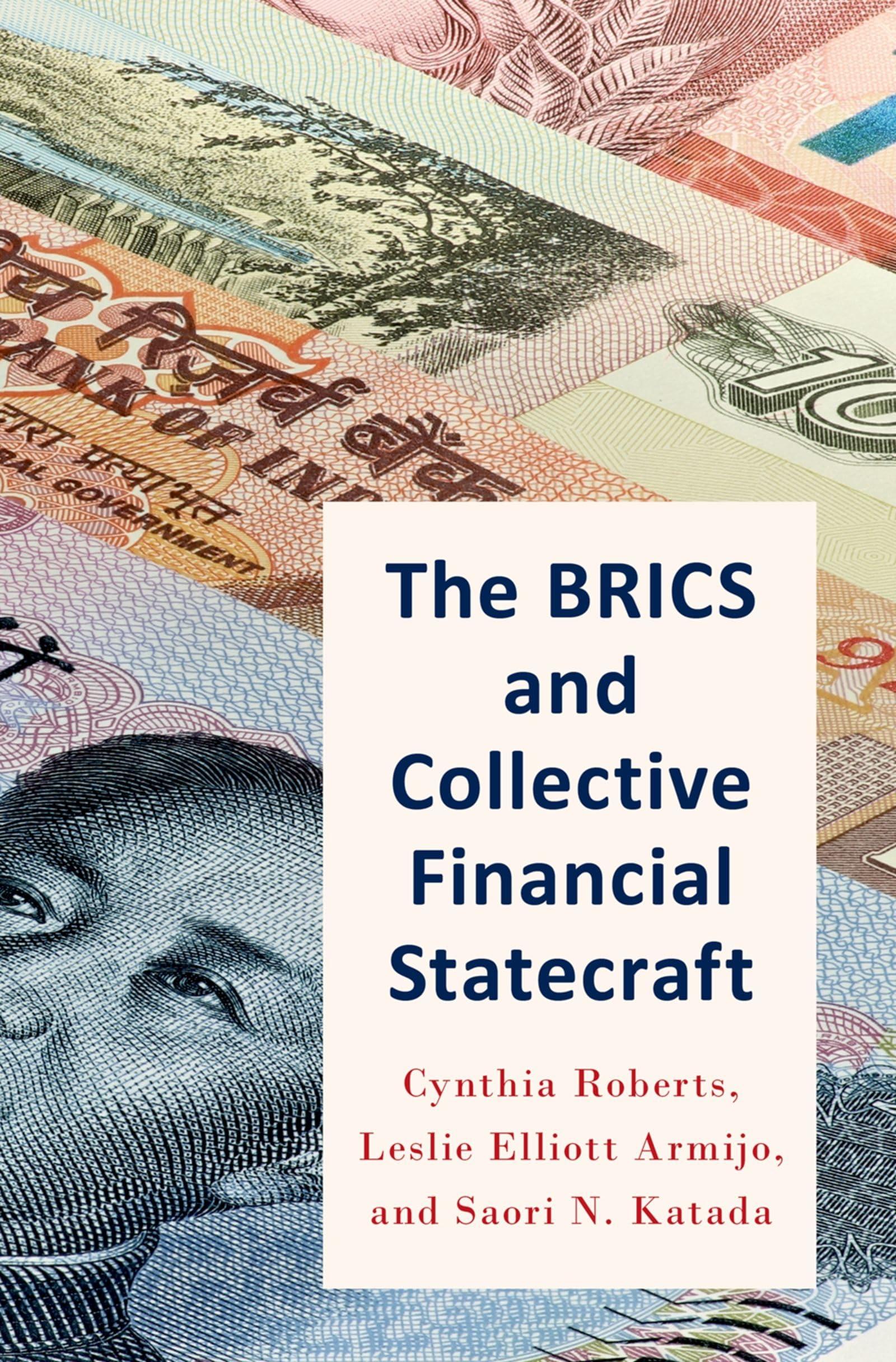
The BRICS and Collective Financial Statecraft
Authors: Cynthia Roberts, Leslie Armijo, Saori Katada
Publisher: Oxford University Press
Publication Year: 2017
About this Book
The BRICS and Collective Financial Statecraft provides a rigorous, comprehensive analysis of how the BRICS nations—Brazil, Russia, India, China, and South Africa—have used financial and monetary tools to pursue their broader foreign policy objectives. Written by three leading scholars of international political economy, the book situates BRICS cooperation within the context of a global power shift in which emerging economies increasingly challenge Western dominance in global economic governance.
The authors define collective financial statecraft as the purposeful use of financial capabilities by sovereign governments to influence international institutions, markets, and political outcomes. Through detailed case studies, they identify four forms of such statecraft: pressuring for internal reforms in existing multilateral financial institutions, pushing for adjustments within global markets, creating alternative institutions such as the New Development Bank, and coordinating to shape new norms and expectations in international finance.
The book argues that while each BRICS member has its own unique motivations for cooperation, they are united by shared grievances—limited influence in IMF governance, resistance to dollar dominance, and concerns over Western-led conditionality. At the same time, shared ambitions for greater international voice and autonomy reinforce their collaboration. China emerges as the most influential member due to its vast financial resources, but the group maintains cohesion through a combination of mutual interests and strategic pragmatism.
This volume is particularly relevant for scholars, policymakers, and analysts of global governance, international political economy, and emerging powers. It reveals the BRICS not as revolutionaries seeking to overturn the liberal economic order, but as reformist actors pursuing influence and leadership—while building fallback institutions when their demands are blocked.
Contents
Dedication
List of Figures
List of Tables
Acknowledgments
Acronyms
1. Introduction: The BRICS as a Club
2. Global Power Shift: The BRICS and Capabilities for Influence
3. BRICS Collective Financial Statecraft: Four Cases
4. Motives for BRICS Collaboration: Views from the Five Capitals
5. Conclusion: Whither the BRICS?
Notes
Index